

Integrating Intelligence Without Disruption
Processus links data and intelligence across platforms, turning fragmented systems into a single, adaptive network.
THE FOUNDATION
The Power Behind Intelligent Systems
Every Processus system starts with a connected foundation. Knowledge Graphs form the structure that gives data meaning and intelligence purpose, powering solutions that think, learn, and adapt.
Why You Should Pay Attention
Knowledge Graph and Gen AI are reshaping the enterprise by driving:
More trusted AI by powering Retrieval-Augmented Generation (RAG) with connected, reliable data.
A Smarter Customer Experience through a unified view of customer relationships across the enterprise.
Faster, smarter threat detection through uncovering hidden patterns within complex data networks.
Semantic Modeling instead of writing code to transform and manipulate data, a robust model that promotes greater efficiency, robust, consistency and data security for handling larger data sets faster.
“Two key technologies are on the move… The two biggest movers on this year’s Hype Cycle are AI engineering and knowledge. graphs ” - Gartner on 2024 Hype Cycle for Artificial Intelligence
GRAPH IS THE CONNECTIVE TISSUE POWERING INTELLIGENT ENTERPRISES
“For anyone building an agent, you need truly great access to the real-time web as well as the entire enterprise knowledge graph. We’ve learned that building RAG apps requires a more sophisticated retrieval system, it’s not good enough to just have a vector search.”
- Satya Nadella (Microsoft CEO), Microsoft Build 2025


82%
Of enterprises implementing AI workloads use graph
80%
Of data and analytics innovations in 2025 will be powered by graph
75-95%
Increase in productivity for data scientists and data engineers using graph
ORGANIZATIONAL GRAPHS
How We Use Knowledge Graphs
to Model Understanding
Creating a 360-Degree Organizational View with Knowledge Graphs

Decision-Making Framework
Knowledge graphs structure data around how decisions are made, organizing information to show how each factor supports organizational goals.
Semantic Framework for Linked Processes
A semantic graph connects people, data, and workflows into a single framework, capturing how expertise and processes drive outcomes.
Digital Twin for Organizational Modeling
Graphs act as digital twins of your organization, mapping real-world structures and workflows to visualize dependencies and opportunities.
Intuitive and Flexible Structure
Knowledge graphs are built for change, flexible enough to integrate new systems, domains, and relationships as your organization evolves.
360-Degree Organizational View
By linking insights from multiple sources, graphs create a unified, real-time view of the enterprise, turning complexity into clarity.
Human-Centered Modeling
Each graph begins with real workflows and expertise, capturing how decisions actually happen.
Hybrid Architecture
We combine semantic precision with property-graph performance for both depth and speed.
Explainable by Design
Every relationship is traceable, making AI reasoning transparent and accountable.
Continuously Adaptive
Graphs evolve as your data and teams evolve, learning without needing to be rebuilt.
Adaptive Knowledge Engine

What Makes Processus Graphs Different
Most graphs connect data. Ours connect understanding. We design knowledge graphs that model not just information, but meaning, capturing how people think, decide, and collaborate.
Each graph reflects the structure of your organization: its roles, processes, and relationships. This creates systems that reason the way your teams do, linking human insight and machine intelligence into a shared, explainable foundation for every decision.
.png)
.png)
.jpg)
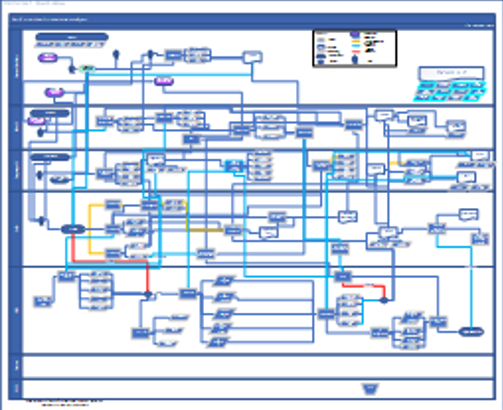
At Processus, semantic digital twins extend our knowledge graph architecture into living models of understanding. Where traditional digital twins mirror physical systems, machines, facilities, or environments, semantic twins mirror meaning. They represent the relationships, logic, and behavior that define how an organization thinks and operates, learning and adapting as people, processes, and data evolve.
Processus twins combine semantic reasoning with real-world data, linking structure and behavior into one adaptive model. They continuously align inputs from systems, workflows, and people, maintaining a live reflection of how your organization actually functions.
How it Works
Shared Intelligence
Teams and AI systems reason from the same connected context.
What It Enables
Faster Response
Real-time updates reveal changes, dependencies, and opportunities as they happen.
Continuous Learning
Each decision refines the model, preserving expertise and accelerating future insight.
Processus semantic twins don’t just replicate systems, they replicate understanding. They make the logic behind your organization visible, traceable, and ready to evolve.
OPERATIONAL KNOWLEDGE MODELS
How Digital Twins Capture Organizational Intelligence
Enhancing Domain-Specific Analytics and AI Capabilities
HUMAN + MACHINE REASONING
The Processus Approach to Semantic Modeling
Bridging Silos, Human Knowledge, and Advanced Analytics for Smarter Decisions
Processus bridges human reasoning and machine intelligence through semantic digital twins and retrieval-augmented generation (RAG). Our systems model how your organization thinks, transforming data, roles, and workflows into a living structure of meaning that large language models can query directly. The result is AI that learns from your organization’s knowledge, not from assumptions, and delivers insights that are contextual, explainable, and uniquely yours.

Building Intelligence That Thinks
Like Your Organization
Every organization thinks and works differently. Processus captures that logic, building intelligence that learns from your world and adapts to how you operate.
From Data to Decision
Every Processus system follows a continuous data-to-decision flow:
-
Capture Organizational Reality – Data, roles, and workflows are gathered from across your systems.
-
Model the Meaning – Processus structures this information into a semantic digital twin that mirrors how your organization operates.
-
Feed the Intelligence – The twin connects directly to large language models through RAG, letting AI retrieve verified knowledge instead of guessing.
-
Deliver Context-Aware Insight – The AI generates responses grounded in your actual operations, reducing hallucinations and tailoring every output to your organization.
Together, these steps create a seamless pipeline, to link data, context, and reasoning so that understanding naturally flows into action.
Why It's Different
-
Human-Centered Design: We model knowledge around how people reason, decide, and collaborate, not just how data is stored.
-
Hybrid Graph Architecture: Semantic precision meets property-graph performance for both reasoning depth and real-time responsiveness.
-
Explainable Intelligence: Every recommendation is traceable to its source, building trust in every decision.
-
Adaptive Learning Loop: Each interaction strengthens the model, continuously refining accuracy and alignment.
This approach ensures results that are accurate, explainable, and uniquely yours. AI that understands your context, explains its reasoning, and speaks in your organization’s voice.
Integration Without Disruption
Our solutions are architected on a flexible, vendor-agnostic foundation, compatible with multiple graph databases, cloud platforms, and AI models.
Whether you operate on AWS, Oracle Cloud, Azure, or on-prem systems, our approach adapts to your environment instead of forcing you into ours. We integrate ontologies, knowledge graphs, and AI orchestration into the tools you already rely on, so you can scale without disruption.
PROVEN ACROSS DOMAINS
From Defense to Education to Finance
Proven in the Real World
Processus technology is adaptable by design. Our graph-based intelligence has powered applications from military threat analysis to wildfire decision support to financial analytics to education systems, each tailored to the data, people, and missions that make those domains unique.


NASA Wildfires
Government Decision Intelligence
In government, our partnership with NASA and the Western Fire Chiefs Association advanced wildfire decision-making during the first critical 24 hours of response. By combining data modeling, decision science, and cognitive systems engineering, the project created a flexible framework that helps agencies assess risks, coordinate faster, and invest more effectively in sensors, analytics, and operations. It’s a model for how science and field expertise can unite to strengthen national resilience.